Solar and Heat Retention Pool Covers guide - 2026 update
Pool covers are one of the most effective ways to extend your swimming season, reduce heating costs, and conserve water. In 2026, there are two main types of covers to consider: solar pool covers and heat retention covers. Understanding how each works helps you choose the right one for your pool.
1. Solar Pool Covers
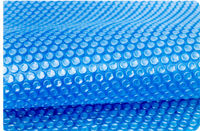
Solar pool covers, often called solar blankets, capture solar energy from sunlight and transfer it to the pool water. They are usually made of UV-resistant plastic with thousands of sealed air bubbles that trap heat.
Key features and benefits:
-
Water Heating: Can increase water temperature by up to 15°C (27°F) depending on climate, pool size, and sun exposure.
-
Heat Transfer: Darker-colored covers absorb heat faster, while lighter covers reflect some heat.
-
Evaporation Reduction: Reduces water evaporation, which also reduces chemical loss.
-
Energy Savings: Can save hundreds of pounds on pool heating costs by reducing reliance on gas or electric heaters.
-
Sizes: Available in most standard pool dimensions; can be trimmed to fit irregular shapes or custom-ordered.
-
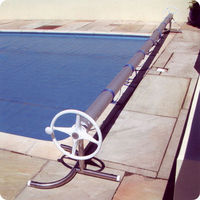
Handling: Lightweight and floats on the surface, but can be difficult to manage manually. Pool cover reels make rolling on/off easier and safer. Using a solar cover without a reel usually requires two or more people.
2. Heat Retention Covers
Heat retention covers are designed specifically to reduce heat loss from your pool, rather than actively capturing solar energy. They are often made of insulating materials and may include a reflective or thermal layer.
Key features and benefits:
-
Heat Retention: Minimizes heat loss during cool nights or when the pool is not in use.
-
Energy Efficiency: Complements existing pool heating systems, saving energy and reducing heating costs.
-
Evaporation Control: Like solar covers, they significantly reduce water evaporation.
-
Material: Thicker and heavier than solar covers, so they provide longer-lasting insulation.
-
Handling: Typically less flexible than solar blankets; reels or manual systems may still be required depending on the size and weight.
3. Differences Between Solar and Heat Retention Covers
| Feature | Solar Cover | Heat Retention Cover |
|---|---|---|
| Primary Function | Captures solar energy to heat the pool | Retains heat already in the pool, reduces heat loss |
| Material | Lightweight, bubble-filled plastic | Heavier, insulating material, may have reflective layer |
| Temperature Boost | Can raise water temp by up to 15°C | Mainly prevents heat loss; minimal heating |
| Evaporation Reduction | Moderate to high | High |
| Ease of Handling | Lightweight, may need reel | Heavier, may need reel or multiple people |
| Best For | Extending swim season in sunny climates | Maintaining water temperature, reducing energy costs year-round |
4. Tips for Using Pool Covers in 2026
-
Always use a cover reel for safety and ease of handling.
-
Regularly clean and dry your cover to prevent mildew or UV degradation.
-
Combine covers with heat pumps or solar pool heating for maximum efficiency.
-
Ensure your cover fits your pool properly; gaps reduce heat retention and effectiveness.
5. Conclusion
Whether you choose a solar pool cover or a heat retention cover, the benefits are clear:
-
Increased water temperature or reduced heat loss
-
Lower heating costs
-
Reduced water evaporation
-
Extended swimming season
For most UK pool owners, solar covers are ideal for passive heating, while heat retention covers are best for conserving energy overnight or during cooler months. Many pool owners use a combination of both for optimal results.
Solar Covers